Research Highlights
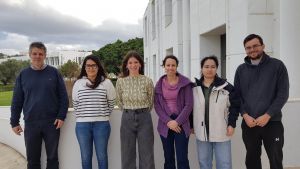
Μosquito vectors of malaria rapidly develop resistance against new generation insecticides
The Molecular Entomology group of the Institute of Molecular Biology and Biotechnology (IMBB) of FORTH, led by John Vontas, Professor at the Agricultural University of Athens, has a longstanding expertise and reputation in the delineation of insecticide resistance mechanisms in malaria vectors and agricultural pests. The current study, published in the prestigious journal Nature Communications, was led by Dr. Sofia Balaska and Dr. Linda Grigoraki at IMBB-FORTH as main authors, and was carried out in close collaboration with the Liverpool School of Tropical Medicine in the UK, revealing a novel carboxylesterase-mediated mechanism of cross-resistance to insecticides in Anopheles gambiae.
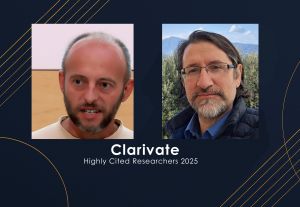
Two researchers of FORTH listed among the “Highly Cited Researchers 2025”, by the internationally recognized organization Clarivate
Prof. Alexandros Stamatakis, head of the Biodiversity Computing Group (BCG) at the Institute of Computer Science (ICS) of FORTH, and Prof. Athanasios Nenes, Affiliated Scientist at the Institute of Chemical Engineering Sciences (ICE-HT) of FORTH are included in the internationally recognized list of “Highly Cited Researchers” for 2025, compiled by Clarivate Analytics based on the “Web of Science” database.This list is published annually and highlights scientists whose publications consistently rank among the most frequently cited worldwide (top 1%), and represents an important honorary distinction. Of the world’s population of scientists, Highly Cited Researchers who have demonstrated significant and broad influence in their fields of research are 1 in 1,000.
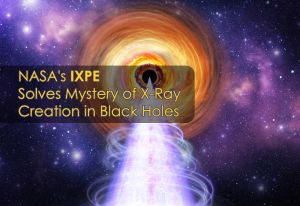
NASA's IXPE Solves Mystery of X-Ray Creation in Black Holes
Recent publication in Astrophysical Journal Letters: New findings by an international team of astrophysicists, based on data collected by IXPE, have revealed the mechanism that creates the bright X-ray radiation, which is associated with the extremely powerful plasma jets that erupt from supermassive black holes.
Crete hosts a prestigious International Neurosciences Conference of the European Molecular Biology Organization (EMBO)
Τhe International Neurosciences Conference of the European Molecular Biology Organization (EMBO), entitled "Cell biology of the nervous system”, is held at the Fodele Beach Hotel in Crete, 5-8 May 2025, with the active participation and co-organisation of the Institute of Molecular Biology and Biotechnology of the Foundation for Research and Technology – Hellas.
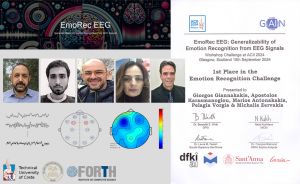
1st Place Award in the international emotion recognition challenge from EEG signals
A research team from the Technical University of Crete, the Hellenic Mediterranean University (HMU), and the Institute of Computer Science (ICS) of the Foundation for Research and Technology - Hellas (FORTH) won the 1st place award in an international emotion recognition challenge using electroencephalography (EEG).
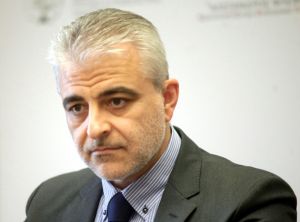
Nektarios Tavernarakis: The First Greek President of the European Molecular Biology Conference (EMBC)
Nektarios Tavernarakis, Prof. of the Medical School of the University of Crete and Chair of FORTH, was unanimously elected President of the European Molecular Biology Conference (EMBC), for a four-year term starting in January 2025. He is the first Greek to hold this position.
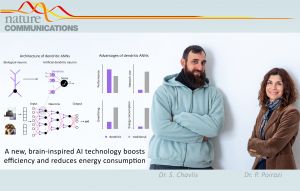
A new, brain-inspired AI technology boosts efficiency and reduces energy consumption
Researchers at ΙΜΒΒ-FORTH have developed a new type of artificial neural network (ANN) that incorporates features of biological dendrites. This innovative design allows for accurate and robust image recognition while using significantly fewer parameters, paving the way for more compact and energy-efficient AI systems.
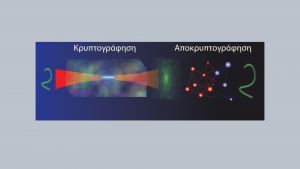
IESL Researchers combine holograms and AI to create uncrackable optical encryption system - Optical encryption approach could enhance security for digital currencies, healthcare, communications and more
As the demand for digital security grows, researchers have developed a new optical system that uses holograms to encode information, creating a level of encryption that traditional methods cannot penetrate. This advance could pave the way for more secure communication channels, helping to protect sensitive data.
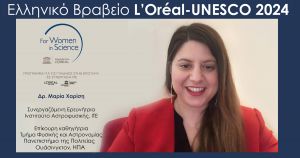
The 2024 L'ORÉAL-UNESCO Greek Award for Women in Science, in the field of Natural Sciences was awarded to Maria Charisi, Institute of Astrophysics, FORTH
Dr. Maria Charisi, Associated Research Fellow at the Institute of Astrophysics of the Foundation for Research and Technology-Hellas (IA-FORTH) and Assistant Professor at Washington State University, in the USA, has been awarded the 2024 L'ORÉAL-UNESCO Greek Award for Women in Science, in the field of Natural Sciences.
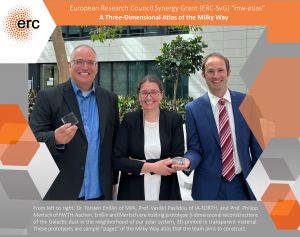
A Three-Dimensional Atlas of the Milky Way
ERC funds scientists to map Galaxy in 3D: Torsten Enßlin (Max Planck Inst. for Astrophysics), Philipp Mertsch (RWΤΗ Aachen University) & Vasiliki Pavlidou (Inst. of Astrophysics-FORTH), have been awarded a highly competitive European Research Council Synergy Grant) aiming to create the first three-dimensional, comprehensive atlas of our Milky Way galaxy.
Page:123456789 | Next >