Events
12:00
Seminar entitled: “Geothermal Energy – Current Status, Challenges and Prospects”
The seminar will take place at the Conference Hall of the Institute of Chemical Engineering Sciences (FORTH/ICE-HT), Stadiou Street – Platani, Patras, on Wednesday, February 12, 2025 (12:00).
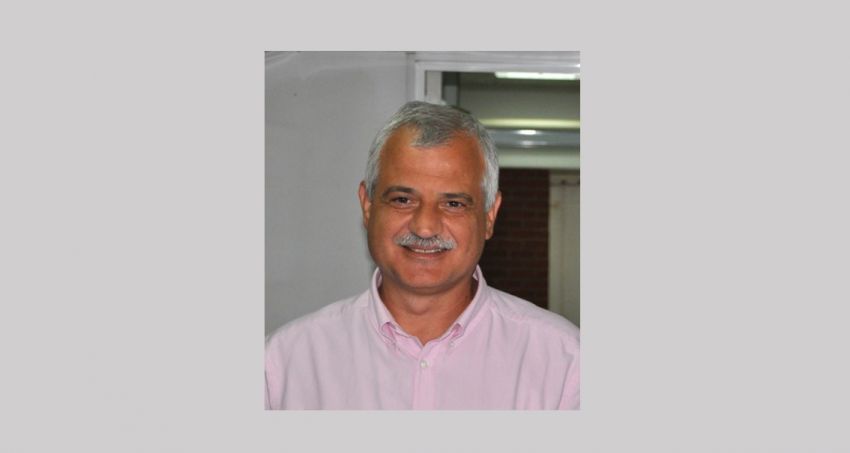
Speaker: Nikos Andritsos, Professor Emeritus, Department of Mechanical Engineering, University of Thessaly.
The seminar will be conducted in Greek.
Abstract
Geothermal energy is a relatively mild and alternative form of energy which, given current technological developments, can cover a significant part of our energy needs. Its uses and applications—found in several regions around the world—vary widely and include electricity generation, agricultural processes, space heating, cooling production, and more.
Although the geothermal energy potential worldwide (and in Greece) is significant, several limitations hinder its effective exploitation. These limitations may be technical (corrosion, scaling), environmental (toxic gas emissions, induced microseismicity), or economic in nature.
Today, geothermal electricity is produced in 31 countries worldwide, with a total installed capacity of 16.2 GWe (approximately 0.17% of total installed power capacity). Although Greece has an estimated high-enthalpy geothermal potential exceeding 300 MWe, there is currently no geothermal electricity production in the country. Initial efforts ended unsuccessfully in the 1980s with the permanent shutdown of the 2 MWe pilot plant in Milos. The global installed capacity for direct geothermal uses currently amounts to 173 GWt, with geothermal heat pumps being the dominant application. The corresponding installed capacity in Greece is only 260 MWt.
Several of the previously mentioned problems are now being addressed satisfactorily. New materials, polymeric components, the use of corrosion and scale inhibitors, and improved plant design (e.g., closed-loop operation with fluid reinjection, high-pressure operation, etc.) have significantly reduced corrosion and scaling issues. However, one of the major challenges of geothermal energy remains the high initial cost associated with geothermal field exploration and drilling.
An important prospect for further expansion of geothermal energy lies in Enhanced or Engineered Geothermal Systems (EGS), which aim to utilize the Earth’s heat in areas where geothermal steam or water is not available, is insufficient, or where rock permeability is relatively low. The International Energy Agency considers it feasible to increase global geothermal electricity production from current levels to 140–160 GWe by 2050.
Short CV
Nikos Andritsos is Professor Emeritus at the Department of Mechanical Engineering of the University of Thessaly. He was born in Thessaloniki in 1956 and studied Chemical Engineering at the Aristotle University of Thessaloniki, graduating in 1979. He received his M.Sc. in 1981 from the University of Manchester – UMIST and his Ph.D. from the University of Illinois in 1985. He also worked as a postdoctoral researcher at the latter university during the summer of 1987.
From January 1987 until joining the University of Thessaly in 2003, he worked as a researcher at the Chemical Process Engineering Research Institute (CPERI/CERTH). He also served (1995–2002) as Vice President of the Board of Directors of the Training Center of the Thessaloniki Technology Park.
His research interests focus on the study, design, and modification of physicochemical processes (including multiphase flows, heat exchangers, membrane technology, mechanisms and control of scale formation in various processes, drying of agricultural products, etc.), aiming at energy and water savings in industry and the exploitation of alternative energy sources, with emphasis on geothermal energy. He is co-author of one book on Geothermal Energy in Greek and one in English, and has translated and edited the book by R.S. Brodkey and H.C. Hershey, Transport Phenomena – A Unified Approach.
He has taught numerous undergraduate and postgraduate courses in his department and, since 1999, has participated as a lecturer in the Aristotle University of Thessaloniki’s postgraduate program entitled “Protection, Conservation and Restoration of Cultural Monuments.”